Can Invisalign Calabasas CA Help With Relapse After Braces?
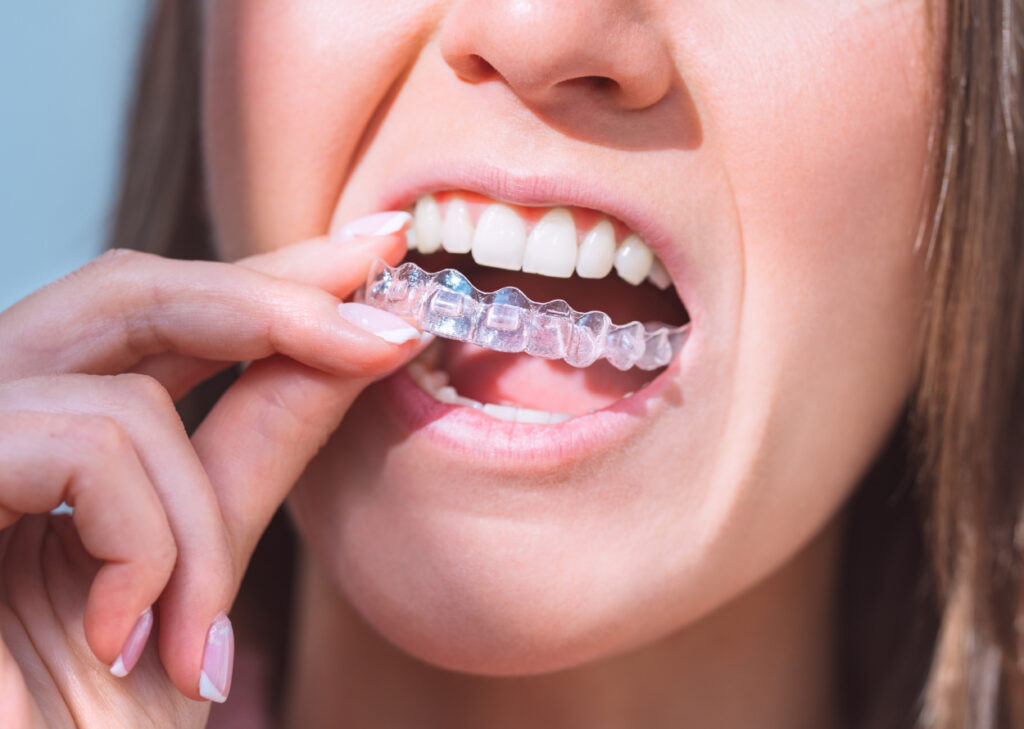
A patient finishes braces, enjoys a straight smile for a while, then notices a front tooth shifting, a lower arch getting crowded again, or bite changes that make the teeth feel slightly “off.” That pattern is more common than most people expect. Teeth are never completely frozen in place. They respond to pressure, aging, grinding, gum changes, and, most often, inconsistent retainer wear. The question is not whether relapse can happen after braces. It can. The better question is whether it can be corrected without going back into full braces.
In many cases, yes. Invisalign can be an effective option for mild to moderate orthodontic relapse, and that includes adults looking for Invisalign Calabasas CA after having braces years ago. The key is understanding what kind of relapse you have, how much movement is needed, and whether clear aligners can deliver the level of control your teeth and bite require.
Why teeth move back after braces
Orthodontic treatment does not end the day braces come off. That is the part many people only fully appreciate later. Teeth are held in bone and surrounded by fibers that have “memory.” After braces or aligners move teeth into new positions, those supporting structures need time to reorganize. Even after that remodeling period, teeth can still drift over the years.
Retainers are the biggest factor. If someone wears retainers exactly as instructed, especially in the first year after treatment, stability is usually much better. But life happens. College, work travel, lost retainers, a cracked tray left in a hotel room, a wire behind the teeth that breaks without being noticed for months, all of these show up in real practice. Sometimes a patient says, “I wore my retainer every night for five years, then stopped for a few months and everything changed.” That is entirely believable.
Age also plays a role. Lower front crowding, in particular, often increases with time even in people who never had orthodontic treatment. Bite forces matter too. Nighttime clenching can create subtle changes. Wisdom teeth get blamed often, though their role is usually overstated compared with retention habits and natural aging. Gum disease can be another reason teeth shift, sometimes dramatically, because bone support is reduced.
The result is relapse, but relapse is not one single thing. A tiny rotation of one upper lateral incisor is very different from a deepened overbite with midline shift and posterior bite changes. That difference is what determines whether Invisalign is a good fit.
What Invisalign can realistically fix after relapse
For the right patient, Invisalign works very well for post-braces touch-up treatment. Clear aligners are especially good at correcting the kind of relapse adults commonly notice first in the mirror: minor crowding, spacing reopening, small rotations, and cosmetic alignment issues in the front teeth.
A common example is someone who had braces as a teenager and now, at 30 or 40, sees one lower front tooth turned inward. Another frequent scenario is a gap reopening between the upper front teeth after a bonded retainer breaks. These are often highly treatable with aligners, sometimes in a matter of months rather than a full multi-year course.
Where Invisalign also helps is patient compliance. Adults who resisted the idea of braces a second time often feel much more comfortable with clear trays. They are removable, generally easier to keep clean, and far less visible in social and professional settings. In a place like Calabasas, where many patients are balancing public-facing work, meetings, events, and photos, discreet treatment is not a trivial detail. It affects whether treatment actually happens.
That said, “can help” is the right phrase here, not “always fixes.” Aligners are powerful, but they are not magic. They rely on biology, planning, and very consistent wear.
When relapse is a good case for Invisalign
The strongest Invisalign relapse cases tend to share a few characteristics. The tooth movements needed are limited or moderate. The roots do not require highly complex repositioning. The bite is either stable or only mildly off. Gum and bone support are healthy enough for safe movement. Most important, the patient is willing to wear the aligners as instructed, usually close to full-time except for meals and hygiene.
In practical terms, that might mean an adult who needs six to twelve months of correction to unwind crowding that developed after years without a retainer. It might also mean someone whose previous orthodontic treatment was fundamentally successful, but who lost retention in a localized area. These are often satisfying cases because the patient already had a good result once. The job is to recover that result and then protect it better.
Some orthodontists and dentists offering Invisalign Calabasas CA also use what people casually call “refinement” or “touch-up” treatment plans for relapse. The exact label varies, and eligibility depends on the clinical situation, but the idea is simple: not every relapse case needs the equivalent of starting from zero.
When braces may still be the better choice
There are situations where traditional braces can offer better control. Significant bite discrepancies are one example. If the back teeth do not fit together properly, or if vertical movement and torque control are especially demanding, fixed appliances may provide more precision. That does not mean Invisalign cannot handle complex cases. In experienced hands it often can. But not every relapse patient is the same, and not every provider uses the same planning philosophy.
Severe rotations can be stubborn in aligners. Teeth that need major extrusion, certain root movements, or extensive correction in multiple planes may also respond more predictably with braces. Relapse tied to advanced periodontal disease is another special category. In those cases, the first priority is gum and bone health. Moving teeth in an unhealthy periodontal environment is not something to rush.
There is also the human factor. If a patient knows they will not wear trays enough, braces may be more effective simply because they stay on. That is not a moral issue, just an honest one. Aligners only work when they are in the mouth.
The first exam matters more than the brand name
People often search for a product first, then a diagnosis second. Orthodontically, it should be the other way around. If you are considering Invisalign Calabasas CA for relapse after braces, the consultation should focus less on sales language and more on the actual mechanics of your bite and tooth movement.
A careful exam usually includes photographs, digital scans or impressions, and x-rays when needed. The clinician looks at tooth position, root angulation, overbite, overjet, midlines, arch form, periodontal health, prior retainers, wear facets from grinding, and the condition of any bonded wires. This is where treatment decisions become individualized instead of generic.
A patient may come in saying, “I just want to fix this crooked front tooth.” Sometimes that is exactly what needs to happen. Other times that tooth is a symptom of a deeper bite issue or a lower arch collapse that must be addressed for a stable result. The best providers explain this in plain language. They do not overpromise a quick cosmetic fix if it risks relapse all over again.
What treatment often looks like
Most post-braces Invisalign cases feel less intimidating than patients expect. Once the records are taken and the plan is approved, a series of custom aligners is made. Each set is worn for a prescribed period, often one to two weeks, though timing varies by case and provider preference. Teeth move in small increments. Some patients need only a handful of trays. Others need several rounds plus refinements.
Attachments are common. These are small tooth-colored shapes bonded to selected teeth so the aligners can grip and move them more effectively. Patients sometimes worry about attachments because they imagine bulky hardware. In reality, most attachments are subtle. You may notice them more than anyone else does.
Interproximal reduction, sometimes called IPR, may also be recommended in mild crowding cases. That involves removing a very small amount of enamel between certain teeth to create room. Done conservatively and appropriately, it can be a useful tool. It is not needed in every case, but for lower front crowding after braces, it often makes treatment more efficient and stable.
One practical truth deserves emphasis: relapse cases can feel deceptively simple at the start. Teeth may look only slightly off, but small corrections still require precise staging and retention planning. That is why the “quick fix” mindset can backfire.
How long does it take?
Time depends on the severity of the relapse, the biology of your teeth, and whether the bite also needs correction. Mild cosmetic relapse may take around three to six months. Moderate relapse often falls in the six to twelve month range. More involved cases can extend beyond that, especially if refinements are needed.
Those are not guarantees, and they should not be presented as such. Teeth do not all move at the same speed. Some align beautifully with each tray. Others lag and need plan adjustments. Patients who wear aligners 12 hours a day instead of the recommended full-time schedule almost always stretch treatment out, even if they think they are “pretty consistent.”
The first few days with a new tray usually bring the most pressure. That sensation is normal and often reassures patients that movement is happening. It should feel snug, not alarming. Significant pain, a tray that will not seat, or a sudden bite change that feels wrong deserves a call to the office.
Cost depends on scope, not just location
Cost is one of the first questions adults ask, and reasonably so. Post-braces relapse treatment can be less expensive than comprehensive first-time orthodontics, but not always. A small touch-up is different from a broad correction involving both arches, bite adjustment, attachments, refinements, and extended retention.
Fees in Calabasas may reflect the provider’s experience, technology, and case complexity rather than geography alone. It is worth asking what is included. Some offices bundle retainers and refinement aligners into the quoted fee. Others separate them. That distinction matters because relapse is not only about straightening teeth again. It is about keeping them there.
If finances are a concern, many offices offer payment plans. The better question during a consultation is not just “What does it cost?” but “What exactly am I paying for, and what happens if refinements are needed?”
Retainers are the real long-term treatment
The hard lesson of relapse is that orthodontic treatment without retention is unfinished treatment. If Invisalign corrects the shifting and no serious retention plan follows, the cycle can repeat.
For most adults, retention is long term and often indefinite. That statement sometimes surprises people, but it should not. Teeth remain capable of movement for life. A well-made retainer is the insurance policy that protects the investment.
There are two main retention approaches after Invisalign relapse correction:
- Removable retainers, usually clear and similar in appearance to aligners, worn on a schedule that often starts nightly.
- Bonded fixed retainers, commonly placed behind front teeth, sometimes combined with removable retainers for extra security.
Each option has strengths and trade-offs. Removable retainers are easy to clean and monitor, but they only work if worn. Bonded retainers provide constant support without relying on memory, but they can break, collect plaque if hygiene is poor, and may allow unnoticed movement if one bond loosens while the wire stays partly attached.
In practice, many patients do best with a layered approach, a bonded retainer where appropriate plus nighttime removable retainers. The exact plan depends on the original relapse pattern, bite forces, and hygiene habits.
Adults often ask, “Will it relapse again?”
That depends less on Invisalign itself and more on retention and diagnosis. If the original cause of the relapse is not addressed, risk remains. A patient who lost a retainer and never replaced it is different from a patient with grinding, tongue posture issues, gum disease, or bite instability. The trays can move teeth back into position, but long-term success comes from understanding why the drift happened.
I have seen patients maintain beautiful results for years after a brief Invisalign relapse correction because they became disciplined about retainers the second time around. I have also seen people invest in retreatment and then slide back because they treated the retainer as optional. Orthodontics rewards consistency more than enthusiasm.
A few signs you should get evaluated sooner
Some relapse is slow and mostly cosmetic. Some is a clue that something else is going on. It is smart to schedule an exam if you notice any of the following:
- a bonded retainer has popped loose or feels bent
- your old removable retainer suddenly does not fit
- teeth are shifting along with bleeding gums or gum recession
- your bite feels uneven when you close
- a single tooth seems to be moving quickly
These signs do not always mean major treatment is ahead, but they are worth checking promptly. Small relapse is usually easier to correct than advanced relapse.
Questions worth asking at a consultation
A good consultation should leave you with a practical understanding of your options, not just a polished sales pitch. If you are exploring Invisalign Calabasas CA for relapse after braces, clear answers to a few points can make the decision much easier.
Ask whether your case is mild, moderate, or complex relapse. Ask whether the goal is purely alignment or alignment plus bite correction. Ask how many aligners are likely, whether attachments or IPR are expected, what the retention plan will be afterward, and whether refinements are included. These questions do more than clarify price and timeline. They reveal how thoughtfully the case is being planned.
One of the most useful questions is also the simplest: “If this were your mouth, would you choose Invisalign or braces?” A confident, nuanced answer often tells you a lot.
What makes Calabasas patients a little different
Every community develops its own treatment patterns. In Calabasas, a notable portion of adults seeking retreatment are not starting from a place of major orthodontic problems. They are often successful professionals, parents, performers, or executives who had braces years ago and now want to correct visible drift without interrupting work or social life. They care about discretion, efficiency, and predictable scheduling.
That profile tends to align well with Invisalign, provided the biology and mechanics also fit. It also means compliance can go either direction. Some adults are meticulous and wear trays exactly as prescribed. Others have demanding schedules and take aligners out frequently for coffee meetings, lunches, and evening events. The treatment plan has to match reality. An Invisalign Calabasas CA Oaks Dental ideal plan on paper is not helpful if daily life makes it impossible to follow.
The bottom line on whether Invisalign can help
For many people, yes, Invisalign is an excellent way to correct relapse after braces. It is especially effective when the relapse is mild to moderate, the bite is reasonably stable, and the patient is willing to wear aligners consistently and commit to retention afterward. It can restore alignment with less visibility and often less disruption than a second round of traditional braces.
But it is not the right solution for every relapse case. Some situations call for braces, periodontal care first, or a more comprehensive orthodontic strategy. The deciding factor is not what sounds most convenient. It is what will move the teeth safely, fit the bite properly, and hold up over time.
If your teeth have shifted and you are considering Invisalign Calabasas CA, the smartest next step is a thorough evaluation with a provider who treats relapse regularly and speaks candidly about limits as well as benefits. When that evaluation is done well, the answer becomes much clearer, and so does the path back to a stable smile.
Oaks Dental
5000 Parkway Calabasas, Suite 308
Calabasas, CA 91302
(818) 643-6521
FAQ About Invisalign Calabasas CA
How many hours a day should I wear Invisalign?
Clear aligners are typically worn for 20 to 22 hours a day. Follow your dentist’s instructions for your specific treatment plan.
What age is best for Invisalign?
Many teens and adults can use clear aligners. A dentist can assess dental development, oral health, and the type of tooth movement needed.
What affects the cost of Invisalign in California?
Cost depends on the complexity and length of treatment and what the quoted plan includes. Ask for an itemized estimate and check any orthodontic coverage with your insurer.